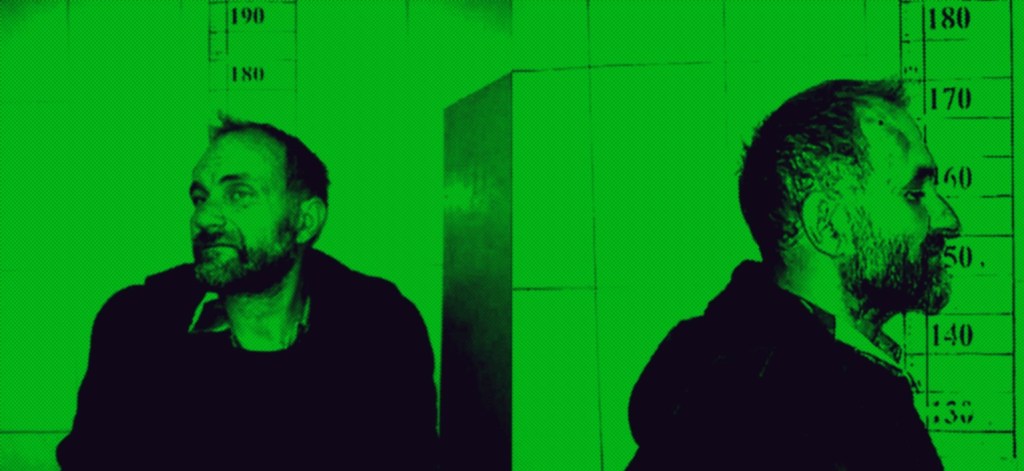
Graveyard fanaticism isn’t quite as strange or macabre as it’s often assumed to be. Long before the introduction of public parks, cemeteries served as places of leisure and social gathering. In the nineteenth century, landscaped ‘garden cemeteries; were intentionally designed to welcome visitors, with sites such as Paris’ iconic Père Lachaise doubling as popular destinations for picnics and family outings. Fast forward to today and communing among the dead has once again become culturally visible, with the growing popularity of so-called ‘tombstone tourism’ sparking debate about where historical curiosity ends and disrespect begins. And much like the recent high-profile arrest of Jonathan Gerlach, Anatoly Moskvin’s far too zealous interest in the dead hasn’t exactly ameliorated negative perceptions of taphophiles.
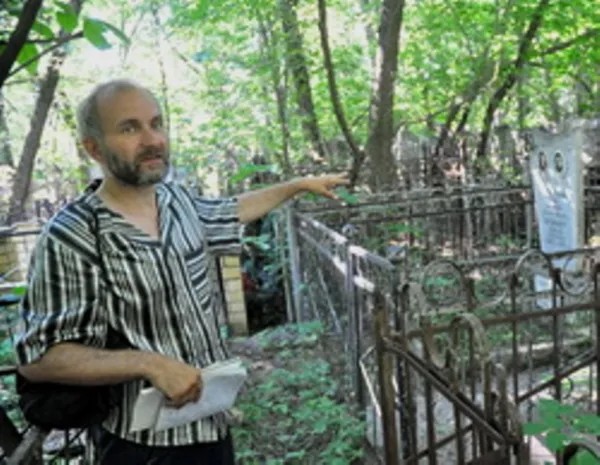
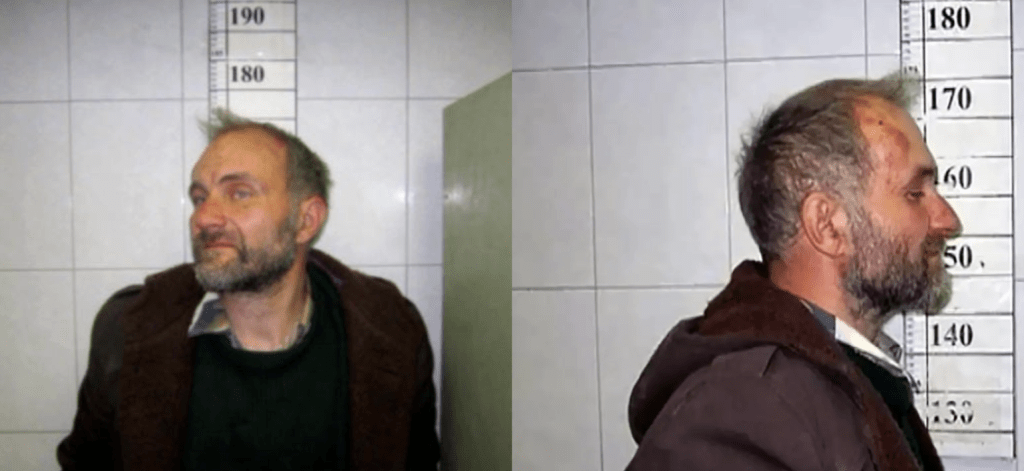
Nicknamed ‘The Russian Doll Maker’, ‘The Lord of Mummies’, and ‘The Perfumer’ (after Patrick Süskind’s 1985 novel), Moskvin was arrested in 2011 when a total of 26 mummified corpses were found inside the Nizhny Novgorod apartment he shared with his elderly parents. Not dissimilar to the UK’s reigning necrophile, Dennis Nilsen, Moskvin claimed that an early experience with a corpse ignited his proclivity for the dead. In an article published before his arrest, he alleged that while on his way home from school one day he was pulled into a funeral for 11-year-old Natasha Petrova. A man forced the young Moskvin to kiss the face of the corpse; Petrova’s mother then placed a ring on Moskvin’s wedding finger and another on the finger of her deceased daughter, symbolically uniting the pair in a realm beyond the mortality. Moskvin claimed to have been plagued by nightmares following the incident, during which the spirit of Petrova would call upon him to learn the dark arts. “My strange marriage with Natasha Petrova was useful,” he later wrote, though he failed to expand on what exactly it benefitted. Soon enough, he was spending his boyhood wandering through local cemeteries, and his macabre interests went on to inform his academic studies.
During his time at Moscow State University (MSU), Moskvin reportedly joined a group of Luciferians and involved himself in occult rituals having become increasingly fixated on pre-Christian beliefs and the permeability of the boundary between life and death. He abstained from sex, drink and drugs – something which he would claim was a lifelong commitment during his legal testimonies. He graduated from MSU in the 1980s with advanced degrees in philology and history, having developed research interests in Celtic history, folklore, languages and linguistics. A polyglot who spoke 13 languages, Moskvin also taught at the Institute of Forgeign Languages and later lectured in Celtic studies at Nizhny Novgorod Linguistic University. He published several respected books, papers and translations, and occasionally contributed articles to local newspapers centred around cemeteries and obituaries. Peers described the self-proclaimed ‘necropolist’ as a ‘genius’ and ‘eccentric’, and it appears that nobody suspected him of anything more nefarious than a simple enthusiasm for the history of graveyards.
In 2005, Oleg Riabov, a fellow academic and publisher, commissioned Moskvin to summarize and list the dead in more than 700 cemeteries in forty regions of the Nizhny Novgorod Oblast. Moskvin claimed to have inspected 752 cemeteries across the region from 2005 to 2007, often walking up to 20 miles a day on his travels. He reportedly drank from puddles and slept in haystacks and abandoned farms to remain close to the graves and once spent the night in a coffin that was being prepared for a funeral. “I don’t think anyone in the city knows them better than I do,” he boasted of his extensive knowledge of the region’s gravesites. Though he was occasionally questioned by the police on suspicion of vandalism and theft during his excursions, he was never arrested or reprimanded. The work commissioned by Riabov remains unpublished but has been referred to as ‘unique’ and ‘priceless’ by Alexei Yesin, the editor of Necrologies – a weekly publication to which Moskvin was a regular contributor.
However, by 2009, locals were reporting that the graves of their loved ones had been desecrated. Initially, the Russian Interior Ministry suspected it was the work of extremist organisations. Valery Gribakin told CNN: “We decided to beef up our police units and set up… groups composed of our most experienced detectives who specialize in extremist crimes”. Two years of investigation proved fruitless, but in 2011, authorities heard reports of Muslim graves being desecrated in Nizhny Novgorod. It was here that Moskvin was finally apprehended, and eight police officers were sent to search his three room apartment.
Inside, officers were hit with the “stink of something that rots in the basements”, as one of Moskvin’s neighbours put it. A hoard of documents, letters and miscellaneous junk scaled the walls and spilled through the doorways. Tucked amongst the accumulation were what appeared to be life-sized dolls dressed in fine dresses and knee-high boots. Some wore an uncanny death mask of make-up; others had their faces completely covered with gauze. But it soon became apparent that this wasn’t a collection of toys; rather, the police had discovered the preserved corpses of various girls and women. Moskvin had even gone as far as to perform bizarre ‘surgeries’ on his exhumed companions. When officers moved one of the bodies, it played music as though on cue, as Moskvin had embedded music box inside the corpse to enable her to ‘sing’. A different corpse had a piece of her own gravestone stuffed inside her body; another contained a hospital tag with the date and the cause of her death. A dried human heart was found inside a fourth. Brief footage of Moskvin’s apartment can still be viewed on YouTube.
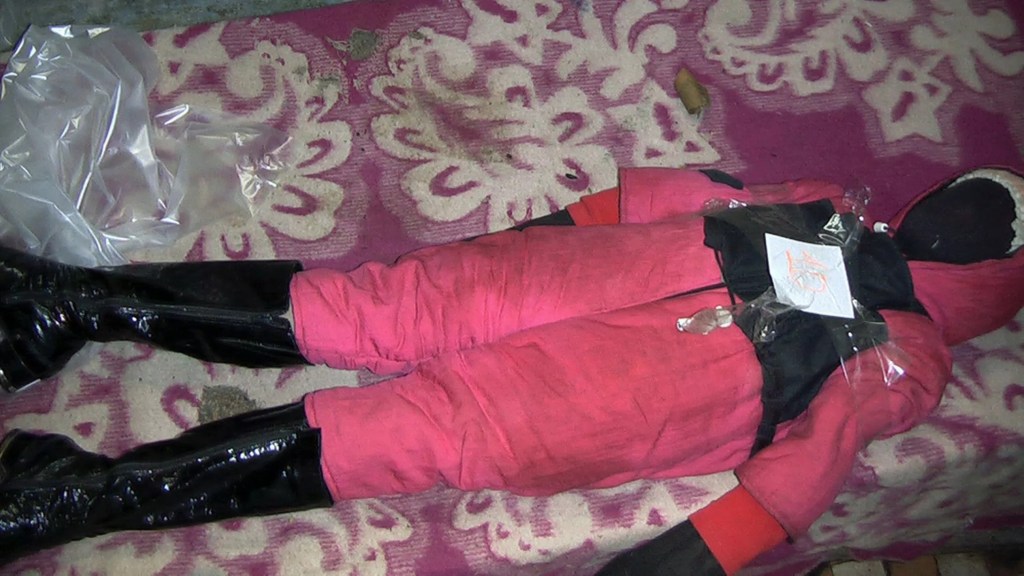
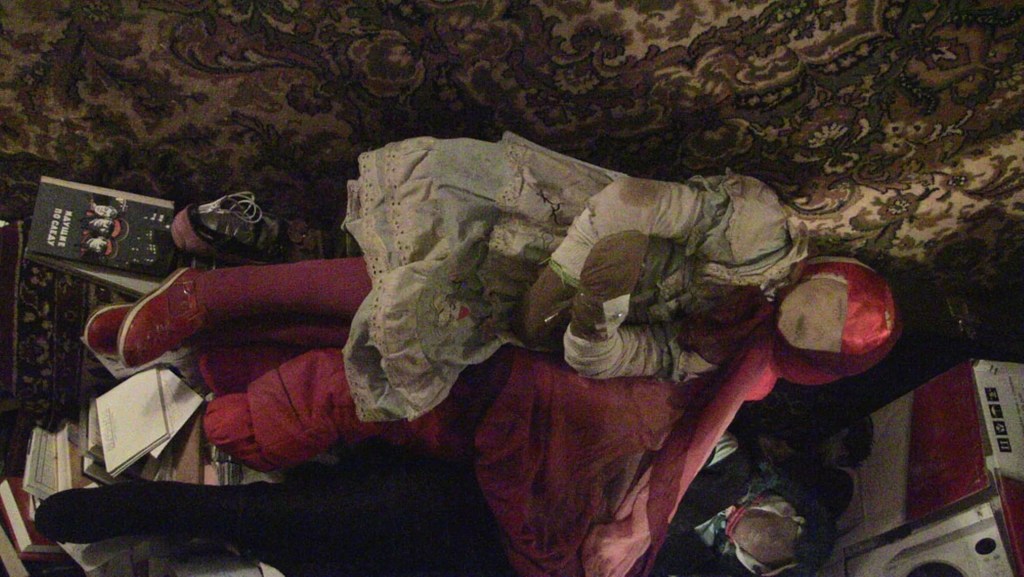
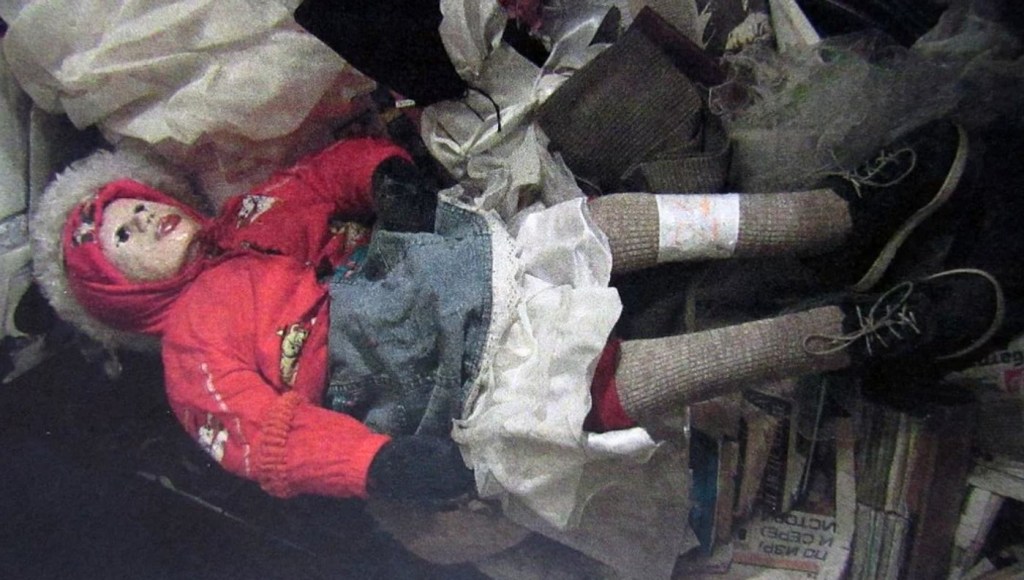
Moskvin actively cooperated with investigators. He explained that he would select bodies by reading their obituaries. If any ‘called out’ to him, he would sleep on their grave to ‘speak’ to their spirit, a practice informed by his study of the ancient Druids and the ancient Yakuts of Siberia. He also told investigators that the exhumation was consensual, as he only moved the bodies if the spirit had ‘requested’ to be resurrected. To prepare the deceased for mummification, he’d stow them away in secure, dry places such as mausoleums and would dehydrate them using a combination of salt and baking soda. Once the process was complete, Moskvin would place nylon tights over their faces on which he’d build wax masks, and he’d stuff their bodies with rags to maintain their fullness as they inevitably withered. Occasionally, he stuck toy eyes to their faces so they could ‘watch cartoons’ with him, and he would even organise birthday parties for them. As age eventually made sleeping on graves physically taxing, he began bringing the bodies to his apartment, believing that spirits would communicate more readily in a domestic environment. The act went undetected by his parents who were typically away at their summer cottage for several months at a time. Elvira, the professor’s then-76-year-old mother, said, “We saw these dolls but we did not suspect there were dead bodies inside. We thought it was his hobby to make such big dolls and did not see anything wrong with it”. The 26 corpses in Moskvin’s possession ranged in age from three to 25; one he had kept for almost nine years. Shoes in Moskvin’s apartment matched footprints found near desecrated graves, and officers realised they’d found their body snatcher.
And the motivation for all of this? Moskvin felt that the parents of the deceased had essentially abandoned their children by laying them to rest in cold, dark graves. He believed the bodies were not truly dead but trapped in a liminal state – a belief undoubtedly inspired by his interest in Celtic and wider pagan cosmologies. He also understood the illegal nature of his activities but claimed that he was incredibly lonely and had always dreamed of having children of his own. As a single man with a modest salary, Russian adoption agencies wouldn’t let him raise a child. He denied any accusations of necrophilia and spoke of the tenderness and attachment he felt for these remains that he treated as his own children, though there were a few in his garage that he said he’d grown to dislike.
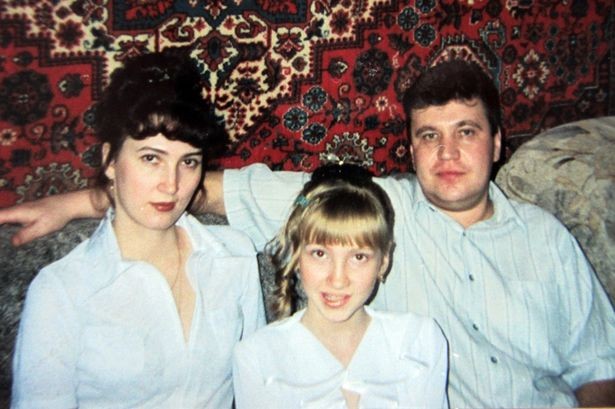
One of the bodies recovered was identified as ten-year-old Olga Chardymova. Olga had been abducted by a drug addict who intended to steal her earrings and other belongings. When she attempted to escape, he struck her with a metal pole. Her body wasn’t discovered for almost five months. In 2012, as the investigation into Moskvin deepened, authorities exhumed Olga’s grave and discovered a hole cut into the lid of her coffin. Notes later recovered from his apartment described how he’d stolen Olga’s body in 2003, digging down to the coffin and breaking through the top to remove the child’s remains.
At this time, Olga’s mother, Natalia Chardymova, visited her daughter’s grave every day and began painting a fence around it. During her visits, she discovered stuffed animals, decorations, and handwritten notes left behind by an unknown visitor. The notes were signed ‘DA’ – short for Dobry Angel (or ‘Kind Angel’) – the name Moskvin used to describe himself. They contained holiday greetings, references to Olga’s age and school year, and affectionate phrases. He even left New Year decorations and referred to her as his ‘Little Lady’. When Olga’s remains were finally recovered from Moskvin’s apartment, Natalia buried her daughter for a second time in an unmarked grave so she could finally rest undisturbed.
Moskvin was charged under Article 244 of Russia’s Criminal Code for the desecration of graves and corpses, an offense punishable by up to five years in prison. Initial accusations that he’d defaced Muslim graves were later dropped. Perhaps unsurprisingly, a psychiatric evaluation diagnosed him with paranoid schizophrenia, which had amplified his tendency to blur scholarship, pre-Christian beliefs and moral reasoning into a justification for criminal acts. On 25 May 2012, the Leninsky District Court of Nizhny Novgorod ruled him unfit to stand trial, exempting him from criminal responsibility and ordering compulsory psychiatric treatment. Prosecutors accepted the ruling without appeal. During the hearing, Moskvin boldy told the victims’ parents, “You abandoned your girls; I brought them home and warmed them up.” Police reiterated that his actions were not sexually motivated, noting that he reportedly found sex repulsive.
Moskvin was committed to a psychiatric clinic, where his confinement was subject to periodic judicial review. In February 2013, a court approved the first extension of his compulsory treatment, a decision that was reaffirmed in April 2014 and again in July 2015. The repeated renewals prompted public comment, with a spokesperson stating: “After three years of monitoring him in a psychiatric clinic, it is absolutely clear that Moskvin is not mentally fit for trial… he will therefore be kept for psychiatric treatment at the clinic”.
As of September 2018, Moskvin appeared on the verge of release, with the possibility of continuing psychiatric treatment from his home. Psychiatrists initially declared him cured and recommended that he be transferred to outpatient care, only to abruptly reverse the assessment. A judge subsequently ordered further evaluations, which concluded that Moskvin’s condition had in fact deteriorated. Despite these findings, approval of an order to keep him detained was delayed. Naturally, the families of the deceased were aggrieved. Natalia Chardymova argued that Moskvin should never be released, stating:
“Neither my family nor the families of the other victims will be able to sleep peacefully. He must remain under constant supervision. I insist on a life sentence—under medical supervision, without the right of free movement”. She continued, “I still find it hard to grasp the scale of his sickening ‘work’ but for nine years he was living with my mummified daughter in his bedroom. I had her for ten years, he had her for nine.”
As of October 2025, Moskvin remains in hospital, with some reports stating that he continues to ‘improve’. However, he allegedly told authorities not to “rebury the girls too deeply, because I will gather them again when I am free.”
 An Exercise in Bad Taste
Leave a comment