
In an age of carefully curated Instagram feeds and the transparently manufactured arcs of ‘reality’ television, Julien’s Auctions is a trove for the authentic content many say they crave but often recoil from. Sure, it’s chock full of designer gowns and eye-wateringly expensive jewels. But amongst the more glamorous effects are digitised remains that would typically be shielded from the public gaze. This includes a wealth of medications prescribed to the late rich and famous; a haunting pharmacopoeia spanning the mundane to the deadly.
Elvis Presley
Estimated sale estimate: $5,000 – $7,000. Final sale price: $10,400.


Elvis developed a taste for amphetamines some time during his two-year stint in the military, an appetite apparently encouraged by a fellow sergeant to ensure vigilance. According to his wife, Prescilla – who he met at this time – he ‘began taking [amphetamines] almost daily’, telling her, “if I didn’t have them, I’d never make them through the day”. Once he returned to the spotlight, stimulants including Dexedrine, Biphetamine and Ritalin allowed him to maintain his hectic work schedule, which compounded the ‘persistent’ and ‘incurable’ insomnia that had plagued him since childhood. He began to take downers to unwind, including Dalmane – a benzodiazepine derivative typically prescribed for the treatment of short-term insomnia. So began a ceaseless cycle of fast food and pharmaceutical abuse that would lead to rapid health deterioration and, ultimately, his premature death at the age of 42.
Though Elvis’ cause of death was initially ruled as cardiac arrest, many medical examiners have since noted polypharmacy as the primary cause. Fourteen drugs were found his system – ten in significant quantity – including various sedatives. In 1977 alone, the unscrupulous physician, Dr George Nichopoulos, wrote Elvis prescriptions for approximately 10,000 doses of uppers, downers and assorted narcotics. Respected celebrity pathologist, Dr Cyril Wecht, described the star as ‘a walking drugstore’.
Julien’s have also auctioned other pill bottles prescribed to Elvis, including:
- Quaaludes – Notoriously abused sedative-hypnotic initially used to treat insomnia and anxiety. It was eventually listed as a Schedule I drug in the United States due to misuse, making its production and distribution illegal.
- Temaril – A veterinary medication used to relieve allergies, inflammation and certain infections in dogs. Elvis apparently used this as a dubious sleep aid.
- ‘Sanilert’ – This isn’t an official name for any medication. But the portmanteau of ‘sanity’ and ‘alertness’ makes is safe to assume that the mystery pills were prescribed to prevent Elvis from hallucinating and/or drooling on himself from his cocktail of pills. On the label is the instruction: ‘One capsule three times daily to keep sanity’.
Dee Dee Ramone
Estimated sale price: $300 – $500. Final sale price: $325.


As the prolific lyricist and bassist of The Ramones (and one-time questionable rap artist), Dee Dee is more readily associated with his addictions than with his struggles with anorexia and bulimia – conditions oft eschewed in discussions of the band’s history. Particularly, bulimia can cause chronic issues with Gastroesophageal Reflux Disease (GERD) due to gradual weaking of the lower oesophageal sphincter, which leads to stomach acid flowing back into the esophagus. Tagamet (also known as Cimetidine) is typically used to treat conditions caused my too much stomach acid, which may explain this particular prescription.
In End of the Century: The Story of the Ramones (2003), Dee Dee recounted his 1989 departure from the band, stating, “I was sick. I was bulimic and anorexic, and nobody could tell because I was on so many antidepressants that I was bloated from them. I was dying.’ Ultimately, it was heroin that would claim his life – Dee Dee died of an overdose in his California apartment on 5 June 2002.
Marilyn Monroe
Estimated sale price: $1,000 – $2,000. Final sale price: $12,500.
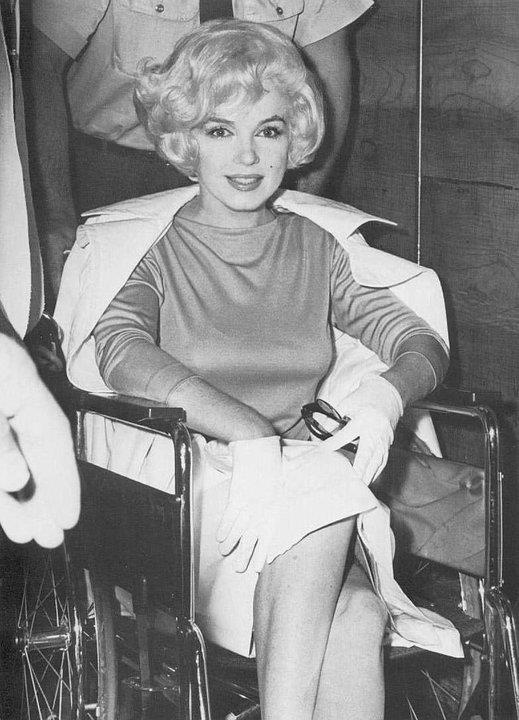

The death of pop culture’s reigning sad girl is perhaps the most resonant tragedy to occur during the golden age of Hollywood, as cemented in the cultural consciousness as her iconic subway grate scene in 1955’s The Seven Year Itch. Though officially classified as a ‘probable suicide’, her passing continues to inspire curiosity and conspiracy theories to this day. Were the FBI involved? Was she assassinated for consorting with the Kennedys? Why would anybody run the washing machine before killing themselves?!
Whatever you surmise, it’s no secret that Marilyn abused barbiturates including Seconal, which acted as a temporary panacea for her ongoing physical and psychological distress. Following an unstable and abusive childhood, she came to embody the quintessential rags-to-riches tale in the eyes of the public. Behind the scenes, Hollywood patriarchs used her as a toy, and she was plagued by depression, insomnia, miscarriages, appendicitis, endometriosis and gallbladder disease. She endured a harrowing stay at Payne Whitney Psychiatric Clinic in 1961 where she was admitted for ‘physical and emotional exhaustion’, and she was subsequently moved to Columbia University Presbyterian Medical Center. A few days before discharging herself, she wrote to her Los Angeles psychoanalyst, Dr. Ralph Greenson: ‘Last night I was awake all night again. Sometimes I wonder what the night time is for. It almost doesn’t exist for me’.
Her autopsy report ruled ‘acute barbiturate poisoning’ as the cause of death, listing 8 mg% of chloral hydrate and 4.5 mg% of pentobarbital in her blood, and a further 13 mg% of pentobarbital in her liver.
Hugh Hefner
Estimated sale price: $1,000 – $2,000. Final sale price: $7,680.
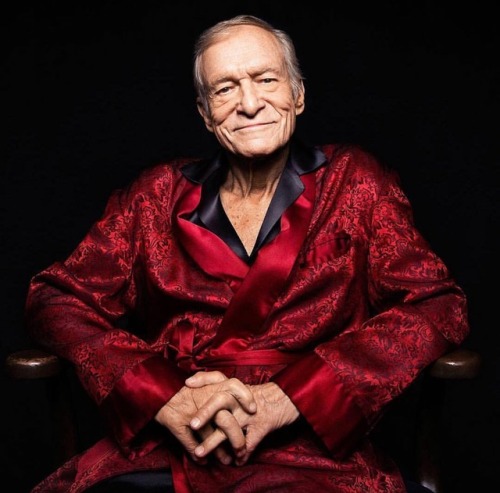

As an alleged sexual predator and the man who exploited the aforementioned Marilyn Monroe, we can take some comfort in knowing that mucky magazine mogul had problems with his dick (I’m aware that he was elderly – just let me have this one). In her memoir Only Say Good Things: Surviving Playboy and Finding Myself, Crystal Harris – Playboy playmate and Hefner’s third wife – revealed that her husband once took so much Viagra to maintain an erection that he suffered hearing loss in one ear.
Viagra didn’t contribute towards Hefner’s death (though enough of it can be fatal). He passed away on 27 September 2017 from cardiac arrest and respiratory failure caused by an E. coli infection.
Truman Capote
Estimated sale price: $300 – $500. Final sale price: $2,560.

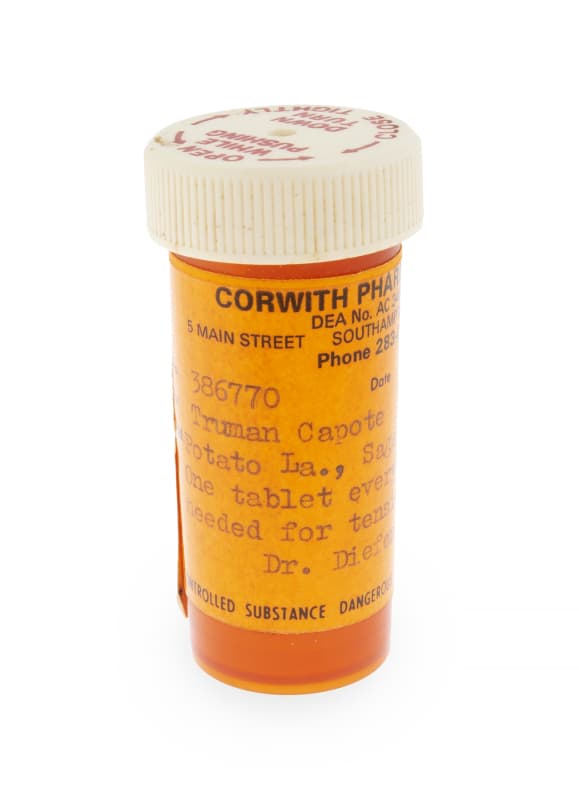
Truman was a true crime fiction pioneer, a New Journalism darling, and a professional shit-talker, and he had his fair share of demons. Though he published some of the most iconic works of the 20th century including In Cold Blood and Breakfast at Tiffany’s, he weathered a turbulent childhood and toxic relationships in adulthood which no doubt exacerbated (and were exacerbated by) his alcohol and drug abuse (as evidenced by Lot 503 and Lot 504). By the 1970s, he was in and out of rehab facilities, having detonated his friendships with the publication of ‘La Côte Basque, 1965’ in Esquire – a thinly veiled exposé of his high society ‘swans’ including Babe Paley, Lee Radziwill and Slim Keith. Valium was one of several drugs found in Truman’s system at the time of his death, including painkillers, barbiturates and anti-seizure medication. They were considered a contributing factor to his official cause of death, which was ruled to be of natural causes accelerated by liver disease, emphysema and infections.
Kurt Cobain
Estimated sale price: $800 – $1,200. Final sale price: $3,840.
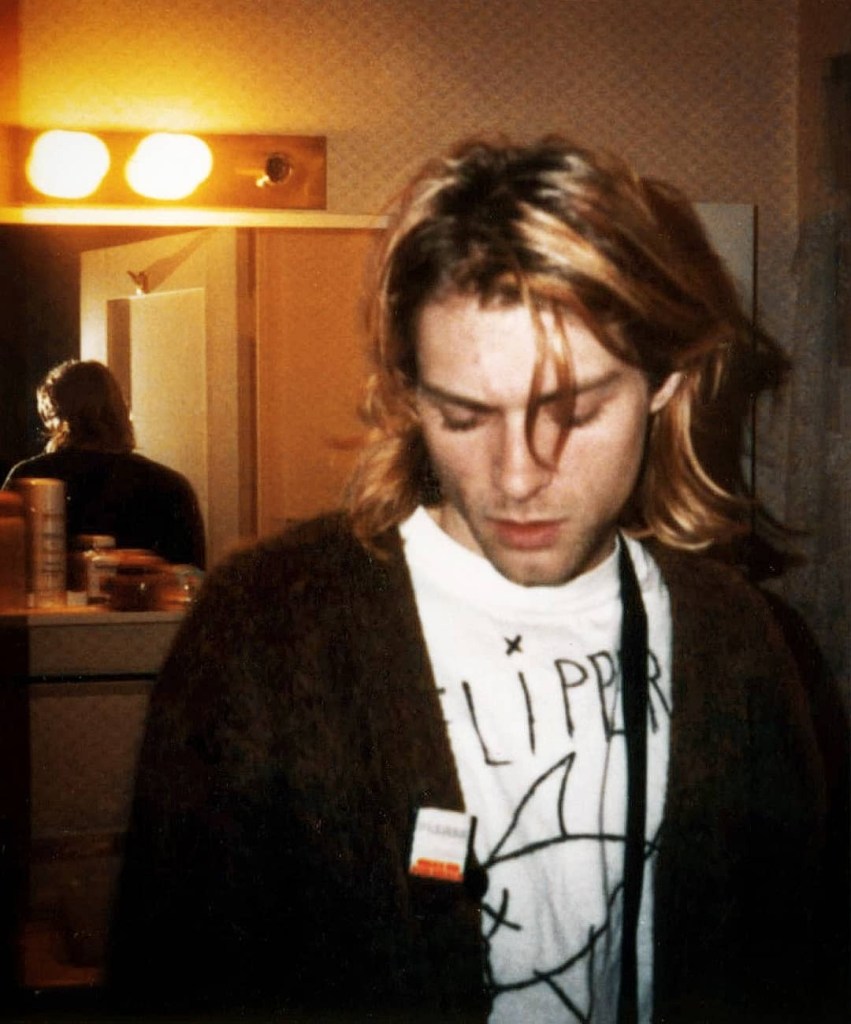

Kurt Cobain often spoke of suffering from undiagnosed, debilitating stomach pain, a condition which led many to believe he was an addict long before his descent into drug abuse. According to his personal journals, he began to use heroin to self-medicate for the pain, writing, ‘When I got back from our second European Tour with Sonic Youth I decided to use heroine [sic] on a daily basis because an ongoing stomach ailment that I had been suffering from for the past five years had literally taken me to the point of wanting to kill myself […] So I decided I feel like a junky as it is so I may as well be one.’
Prilosec – a proton pump inhibitor prescribed to treat conditions of excess stomach acid including heartburn, GERD, and ulcers – provided Kurt with some relief before his untimely death from a gunshot wound to the head at the age of 27. He told MTV, “I have finally been prescribed the right stomach medicine after six years of being in constant pain.”
Marlene Dietrich
Valium pill bottle (date unknown)
Estimated sale price: $400 – $600. Final sale price: $896.

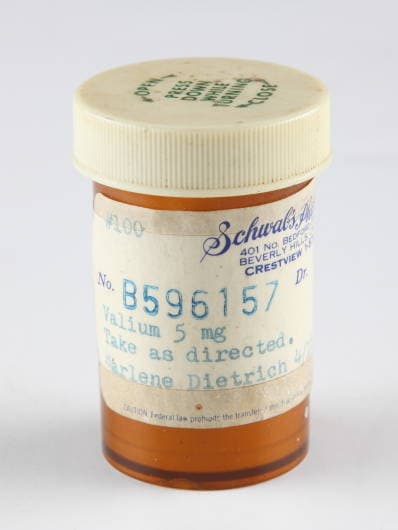
It’s unclear when Berlin’s bisexual beauty was popping benzos. However, in her last two decades she became increasingly reliant on alcohol and painkillers, having battled cervical cancer and advanced arteriosclerosis. She became a recluse following a series of falls, shutting herself away in her Paris apartment and, according to her daughter, Maria Riva, pissing into a Limoges pitcher and defecating in a casserole dish.
In the unforgiving Marlene Dietrich: By Her Daughter, Maria recounted how in her later years, her staunch anti-fascist mother would send ‘lethal packages’ of prescription medications to her acquaintances for the most minor of ailments. ‘It does give one a funny feeling when one day’s post contains a morphine derivative for “that little twinge in your shoulder […] [A]nd for those in-between times? A year’s supply of Valium!” Marlene died of kidney failure on 6 May 1992 at the grand age of 90.
Elizabeth Taylor
Empirin and codeine pill bottle (1980)
Estimated sale price: $400 – $600. Final sale price: $1,125.

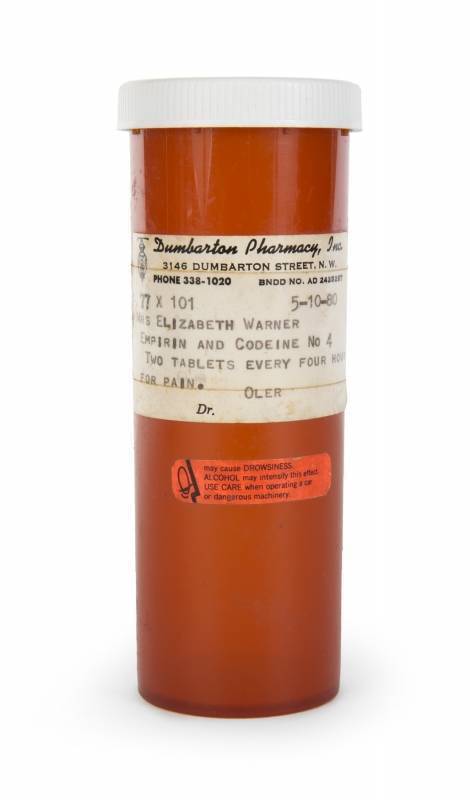
The formidable Elizabeth was candid about her dependency on alcohol and prescription medication. When she was hospitalised for a bowel obstruction in December 1983, her family – tiring of her alcohol and pill abuse – staged an intervention which led to a 7 week stay at the Betty Ford Clinic. She was one of the first stars to openly discuss her time at the rehabilitation centre. “For 35 years, I couldn’t go to sleep without at least two sleeping pills”, she said. “I’m a genuine insomniac. And I’d always taken a lot of medication for pain. I’d had 19 major operations, and drugs had become a crutch […] I just felt I had to get stoned to get over my shyness. I needed oblivion, escape.”
In 1954, Elizabeth’s third husband, Mike Todd, died in a plane crash, instigating the star’s initial bout of self-medicating with prescription drugs (she’d become a consumer after a horse-riding accident during the filming of 1947’s National Velvet). In 1962, she attempted suicide during her scandalous marriage to the controlling Eddie Fisher by taking large quantities of sleeping pills. The incident occurred in the midst of her affair with Richard Burton; a notoriously tempestuous romance charged by mutual alcoholism, pill abuse and genuine affection which saw Burton and Taylor marry and divorce twice. Burton died in 1984 from a stroke – he was diagnosed with cirrhosis of the liver and kidney disease in April 1981.
Elizabeth lived long enough to become a high-profile advocate for addiction awareness. In 1987, state officials conducted an inquiry into the excessive prescription of addictive medications to the star. Elizabeth died of congestive heart failure in 2011, at the age of 79.
 An Exercise in Bad Taste
Leave a comment