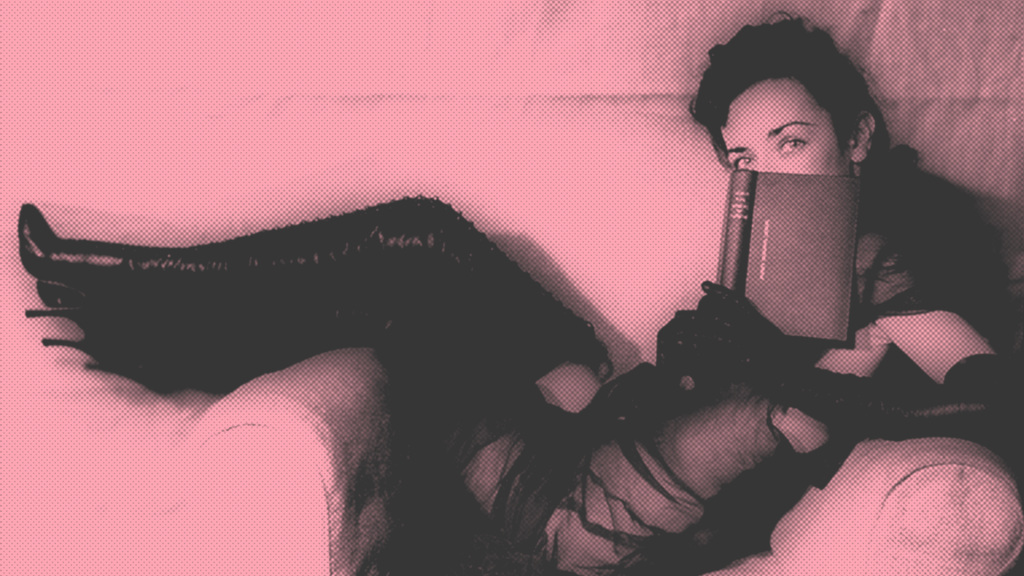
John Willie (née John Alexander Scott Coutts) was a prolific fetish illustrator, photographer, shoemaker, editor and publisher whose erotic activities left an indelible, 6 inch stiletto shaped mark on the visual style of contemporary BDSM. Since revived interest in mid-century fetish icons grew from the 1970s, Coutts’ influence expanded amongst alternative subcultures. In 1995, Taschen published The Complete Reprint of John Willie’s ‘Bizarre’, introducing Coutts to a new generation of fetish aficionados and alt fashion fanatics. Today, his influence be gleaned from the photography of Helmut Newton to the main stage of RuPaul’s Drag Race.
John Coutts was born in Indonesia in 1902 to a middle-class British family. He moved to Brisbane, Australia, in 1926 after wedding nightclub hostess Eveline Stella Frances Fisher, whom he divorced after a few years of marriage. In the early 1930s, Coutts met his second wife and subsequent muse, Holly Anna Faram, and began working as a manual labourer to fund his passion for art and photography. It was through these mediums that Coutts showcased his predilection for bondage, discipline, and extreme footwear, drawing inspiration from the European fetish style of Carlo and Diana Slip.
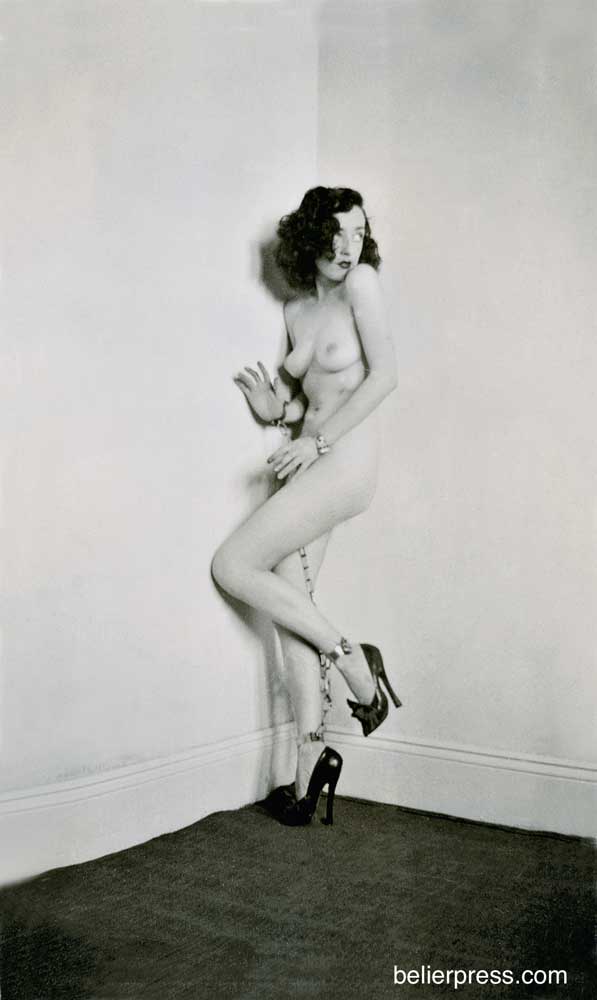
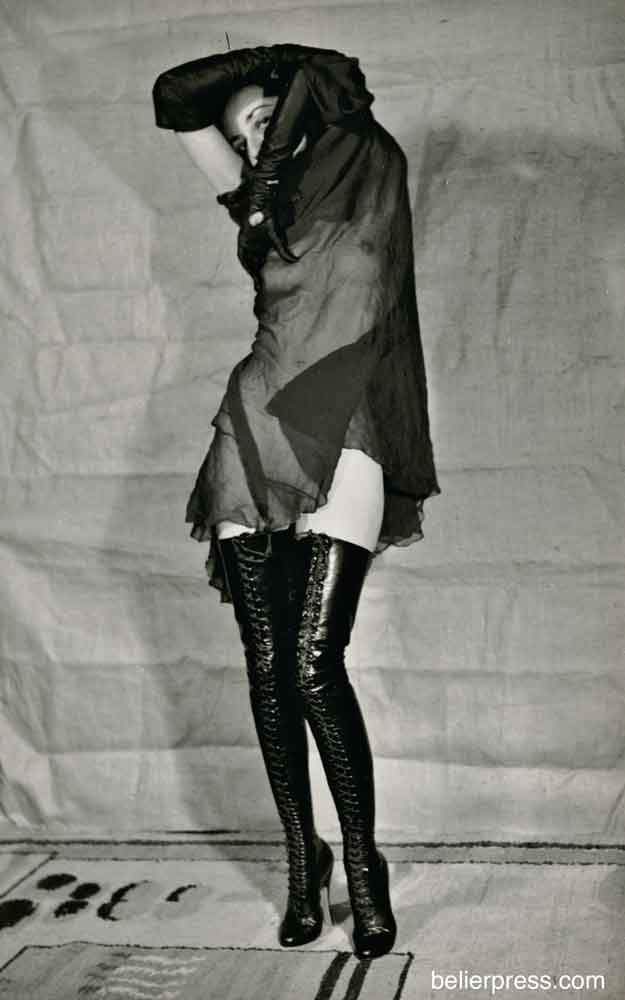
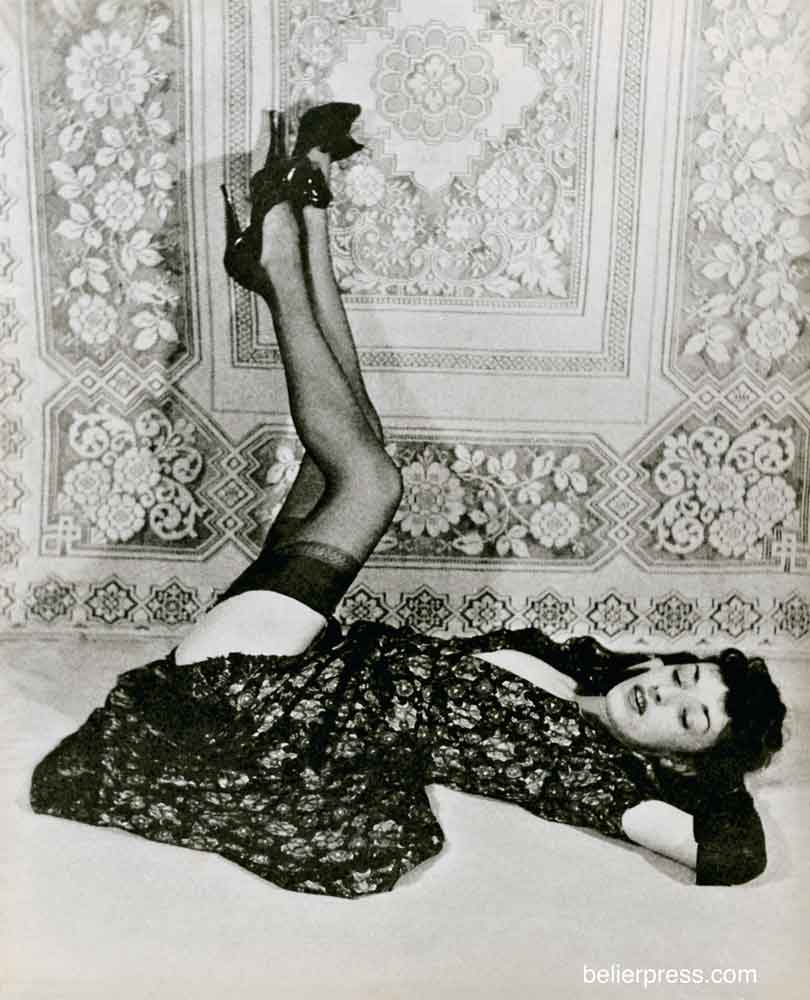
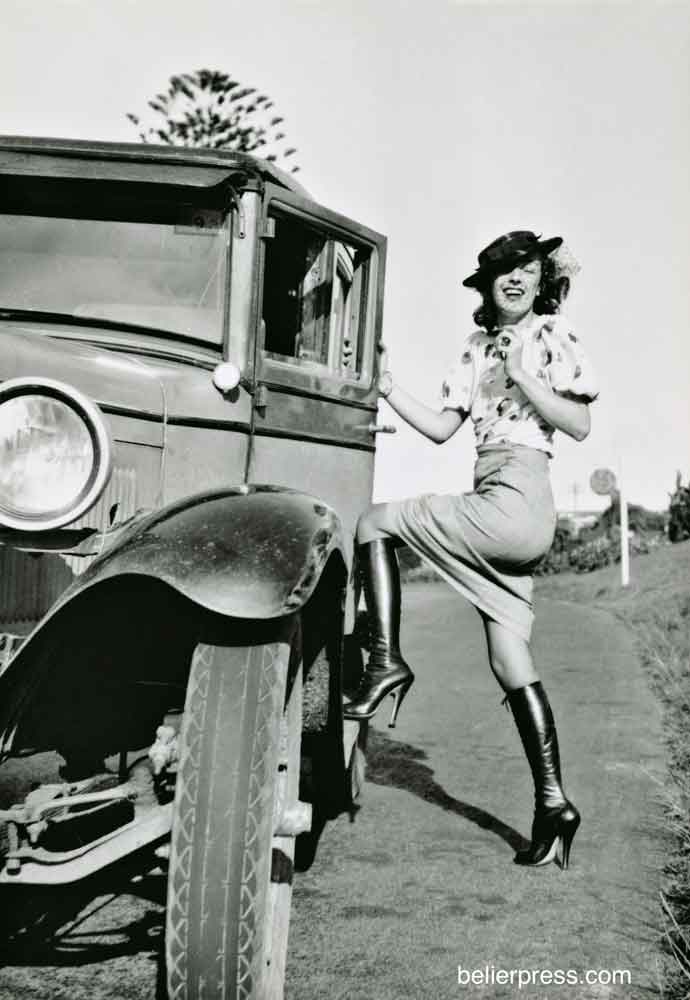
Images courtesy of Belier Press.
During a visit to McNaught’s shoe store in Sydney, Coutts came into contact with a community of high heel enthusiasts run by a retired ship’s captain who went by the name ‘Achilles’. The group — possibly called ‘The High-Heel Club’ — distributed fetish material through print media, and Coutts began selling his images and illustrations to others on the group’s mailing list. Faram was the subject of some of Coutts’ most iconic photographs which would later feature in his iconoclastic fetish mag, Bizarre. Notably, Coutts was an avid reader of London Life magazine, but became frustrated by the publication’s resistance to depicting bondage. Coutts’ first published illustration appeared in London Life in December 1935, but the magazine failed to renumerate Coutts for his work and altered his sketches to obscure the ‘chains, whips and straps’.
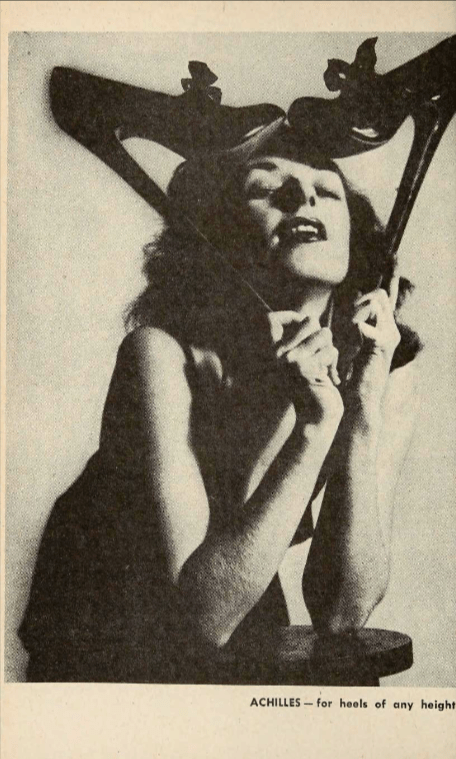
Consequently, he decided to produce his own magazine for connoisseurs of the erotic underground. To gain financial backing, Coutts acquired the rights to the name ‘Achilles’ and advertised fetish footwear under the alias in the pages of London Life. He didn’t intend to make or sell shoes — rather, he charged what he believed would be too much for any potential customer in order to push his more reasonably priced photographs. But it didn’t quite work out that way.
As readers started to place shoe orders with the so-called Achilles, Coutts was forced to become a designer and maker of extreme footwear. Some of his high heels appear in his photographs and in the pages of Bizarre, and it was through this venture that Coutts developed a mailing list of kinky clientele.
Coutts ordered the printing of what technically would have been Bizarre #1 in 1939, but the outbreak of WWII swept the artist into military service, and the proofs for the ’39 issue were never recovered. The first official printing of Bizarre came in Montreal in 1946, which saw Coutts adopt the phallic nom de plume, John Willie.
Named Bizarre #2, the publication was composed with reference to the might-have-been Bizarre #1. Coutts took published letters from London Life and rehashed them, printing them in Bizarre #2 to create the appearance of a dedicated readership. Approximately 5000 issues were distributed by Coutts and were sold at 25 cents from Montreal news stands.

He eventually approximated a mailing list of 5000 clients, to whom he also sold his bondage and fetish photo sets and his iconic cartoon series, Sweet Gwendoline.
Bizarre magazine catered to non-normative sexual pleasures and activities including BDSM, body modification, object and transvestic fetishism and cross-dressing. Though the genuine reader correspondence printed in later issues of the magazine presented an exclusively cis-gendered, heterosexual demographic, the magazine’s subtle exploration of gender performativity and transgression would have conceivably appealed to a wider audience.

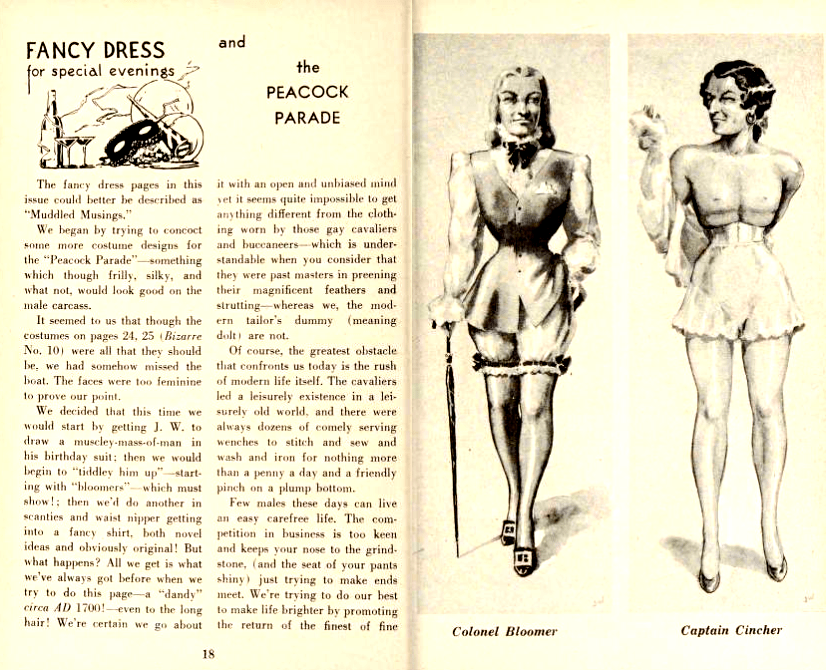

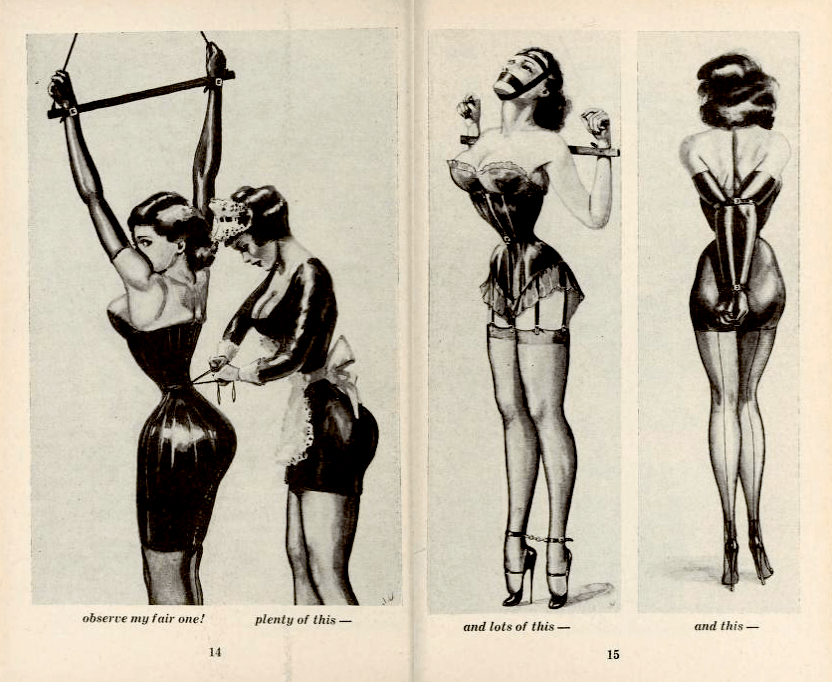
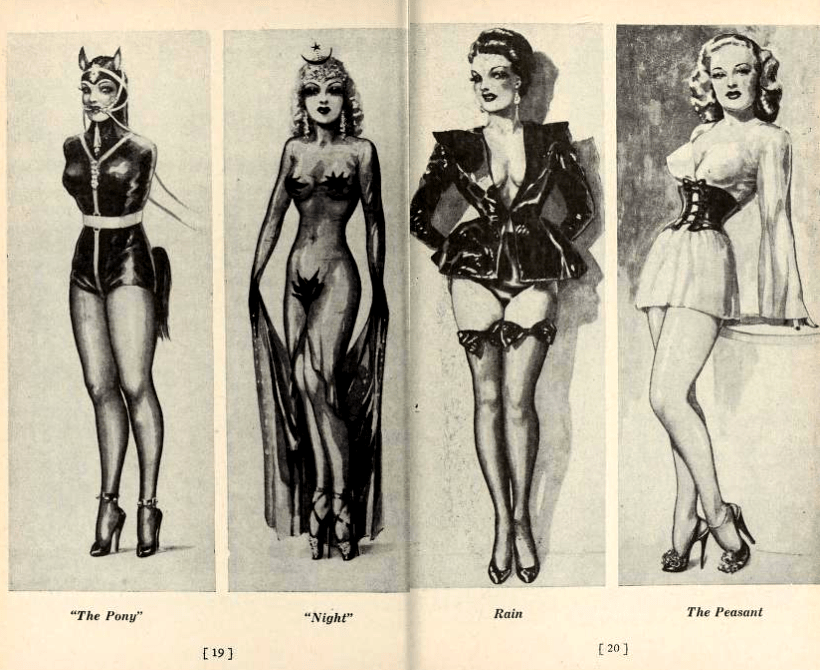
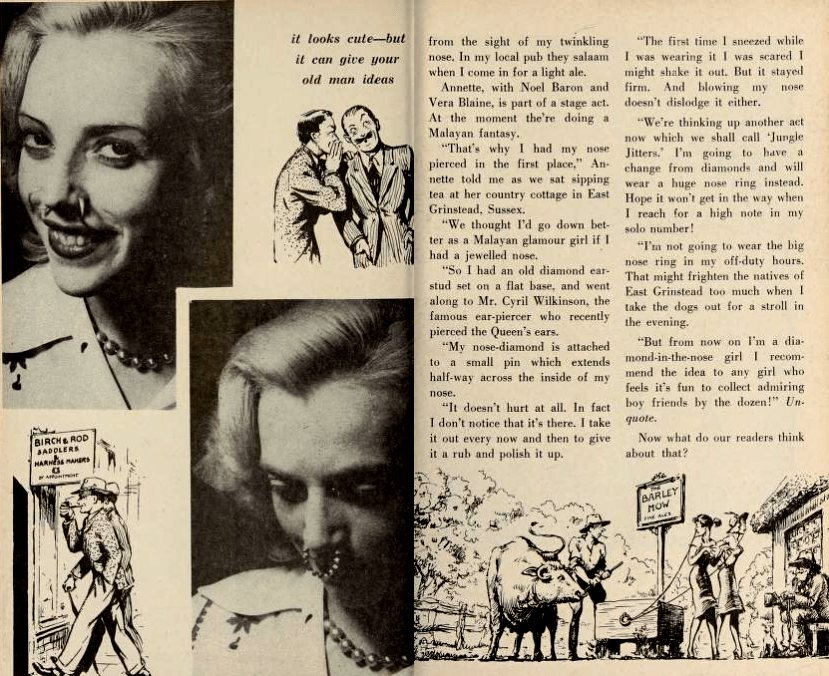
As homosexuality was still illegal in North America, it’s unsurprising that Coutts would frame things within the boundaries of same-sex attraction. Whatever the case, Bizarre magazine was ahead of its time in creating a shame free space for sexual and creative expression:
Bizarre. The magazine for pleasant optimists who frown on convention. The magazine of fashions and fantasies fantastic! Innumerable journals deal with ideas for the majority. Must all sheeplike follow in their wake? Bizarre is for those who have the courage of their own convictions. Conservative?—Old fashioned?—Not by any means!
John ‘Willie’ Coutts writing in Bizarre, Vol. 3.
Coutts moved to New York around 1946-7, where he printed Bizarre #3. As he was unable to secure a distributor for the magazine, he was forced to continue the job on consignment, which meant Bizarre’s base was considerably small compared to that of contemporary distributors of fetish erotica such as Irving Klaw and Exotique’s Leonard Burtman. Though it was not by choice, it was through his consignment and mail order operation that Coutts circumvented authorities until 1954. J. B Rund, a key authority on the research of John Willie, estimated that roughly 10,000 – 15, 000 copies of each issue of Bizarre were printed and distributed. Whilst living in New York, Coutts became acquainted with the social circle of the godfather of American fetish, Charles Guyette, through whom he met the aforementioned distributor, Irving Klaw. Prior to 1947, Klaw — who did not personally participate in the BDSM lifestyle — operated primarily as a cheesecake photographer. His move into the fetish photo business was strictly financial, and he attempted to enlist the experienced Coutts to assist on bondage shoots. Coutts refused, deeming Klaw a ‘shrewd’ and exploitative man who breeched the boundaries of his models’ consent.
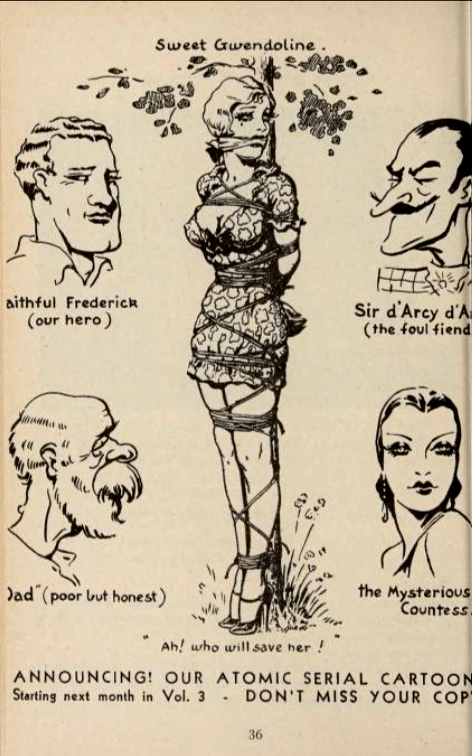
Klaw also purchased some of Coutts’ negatives and his cartoon series, Sweet Gwendoline, for distribution. Disregarding the protests of the fetish artist Eric Stanton (whose illustrations were heavily indebted to Coutts’ work), Klaw ordered Stanton to alter some of Coutts’ original illustrations to avoid possible obscenity charges. He made considerable money from the resale of Coutts’ work, and reportedly extended a poor share of the profit to the Bizarre creator.
Bizarre magazine has been noted for its adoption of whimsical innuendo, and the images it contained rarely depicted full or even partial nudity. In 1948, the Association of Comics Magazine Publishers put forward a code that forbade ‘wanton’ or ‘nude’ imagery, women in garments smaller than a bathing suit, vulgar and obscene language, sadism, and positive depictions of divorce.
As such, Bizarre relied on the sexual symbology of fetishist clothing and coded, tongue-in-cheek discourse. Coutts made it a kind of cult zine championing extreme style, with sexual desire brimming barely beneath the surface. Including images of Hollywood stars (such as Marilyn Monroe and Linda Darnell) and discussion of contemporary fashion allowed Coutts to safely titillate his target audience without arousing the suspicions of the authorities.
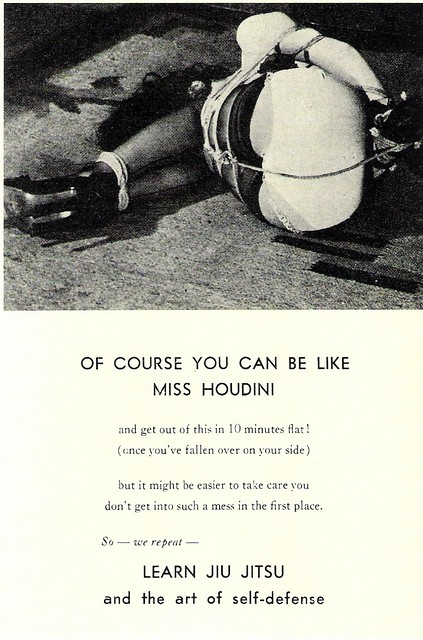
In fact, it was a reference to the biblical Adam and Eve that eventually dropped Bizarre magazine into hot water. The might-have-been Bizarre #1 was produced and published retrospectively in 1954, at the same time that Bizarre #14 was distributed. Bizarre #14 depicted an eroticised Eve, and Bizarre #1 justifiably linked the rise of extreme fashion as a reaction to paternalistic Christian morality. Police seized the material from Coutts’ bookseller, but the case didn’t result in the same sustained legal action leveraged towards such contemporaries as Klaw and Burtman. Coutts evidently continued to publish Bizarre until 1957, before selling the magazine to a close friend.
With Bizarre abandoned, Coutts continued his mail-order operation of photoshoots and illustrations from Los Angeles. He remained a producer of fetish erotica until he was diagnosed with a brain tumour in 1961. Around this time, Postal Inspectors visited Coutts regarding their inquiry into his ‘obscene’ materials. He was given several weeks to close his business, which resulted in Coutts destroying the majority of his remaining material. Coutts returned to his family in Britain after undergoing unsuccessful treatment in Arizona, where he died in his sleep on the morning of 5 August, 1962.
The surviving material had a resounding impact on the contemporary aesthetics of BDSM culture and alterative fashion.
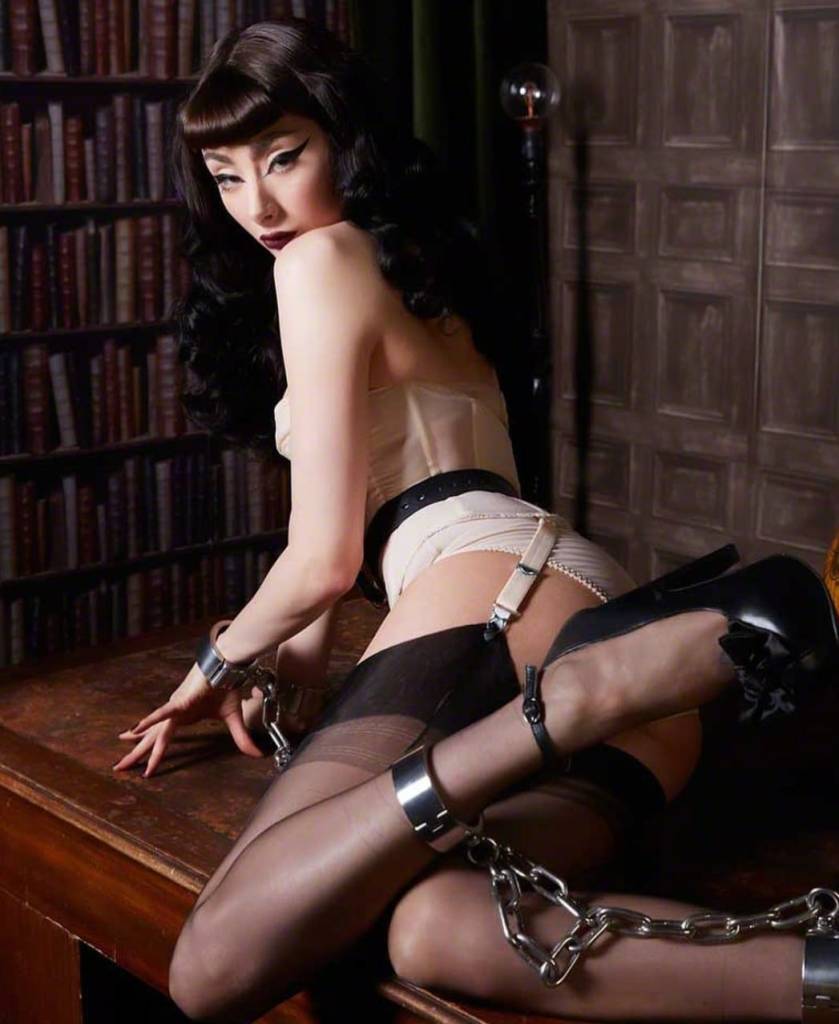
Today, raven hair and septum rings abound, and popular fetish models including Dita von Teese, Miss Mosh, Bernie Dexter and Sweet Severine have posed in homage to Coutts’ vision. The Taschen reissues of Bizarre magazine and Belier press’ Possibilities have pushed Coutts’ profile to greater heights, with artists and designers such as Violet Chachki and Dilara Findikoglu citing Coutts as a notable inspiration.
For more, keep your eyes on Richard Pérez Seves’ FetHistory. A John Willie project may be in the works…
Sources:
Bienvenu, Robert, The Development of Sadomasochism as a Cultural Style in the Twentieth-Century United States (unpublished doctoral thesis: Indiana University, 1998).
Pine, Julia, ‘In Bizarre Fashion: The Double-Voiced Discourse of John Willie’s Fetish Fantasia’, Journal of the History of Sexuality (2013) 22:1, pp. 1-33.
Possibilities: The Photographs of John Willie (New York: Bellier Press, 2016).
The Complete Reprint of John Willie’s Bizarre, Vols 1-13 (New York: Taschen, 1995).
‘This incredible fetish photo history book will have you tied up for months!’ Dangerous Minds, 16 March 2016 <https://dangerousminds.net/comments/this_incredible_fetish_photo_history_book_will_have_you_tied_up_for_months>
 An Exercise in Bad Taste
Leave a comment